Second Life, First Priority: Turning Battery Waste Into Clean Power

14 August, 2025
The scale of India's clean energy revolution over the past decade is evident in the growing adoption of clean energy solutions. From electric vehicles, solar parks, and grid-scale batteries, the country’s renewable energy capacity has tripled to 232 GW in 2025 as a result. Yet, a crucial question emerges: How clean is our clean power?
According to NITI Aayog, the batteries powering this transition are expected to reach nearly 128 GWh in volume by 2030. Of this, 46 per cent will come from electric vehicles alone. Without adequate systems for end-of-life treatment, these batteries pose a mounting waste burden that goes beyond the overflowing landfills, leading to irreversible loss of valuable resources.
Fortunately, the opportunity to turn this around exists already. Battery repurposing offers India a chance not just to clean up its energy transition but to truly lead it by closing the loop on its most critical resources.
Battery Waste Potential: A Resource Security Imperative
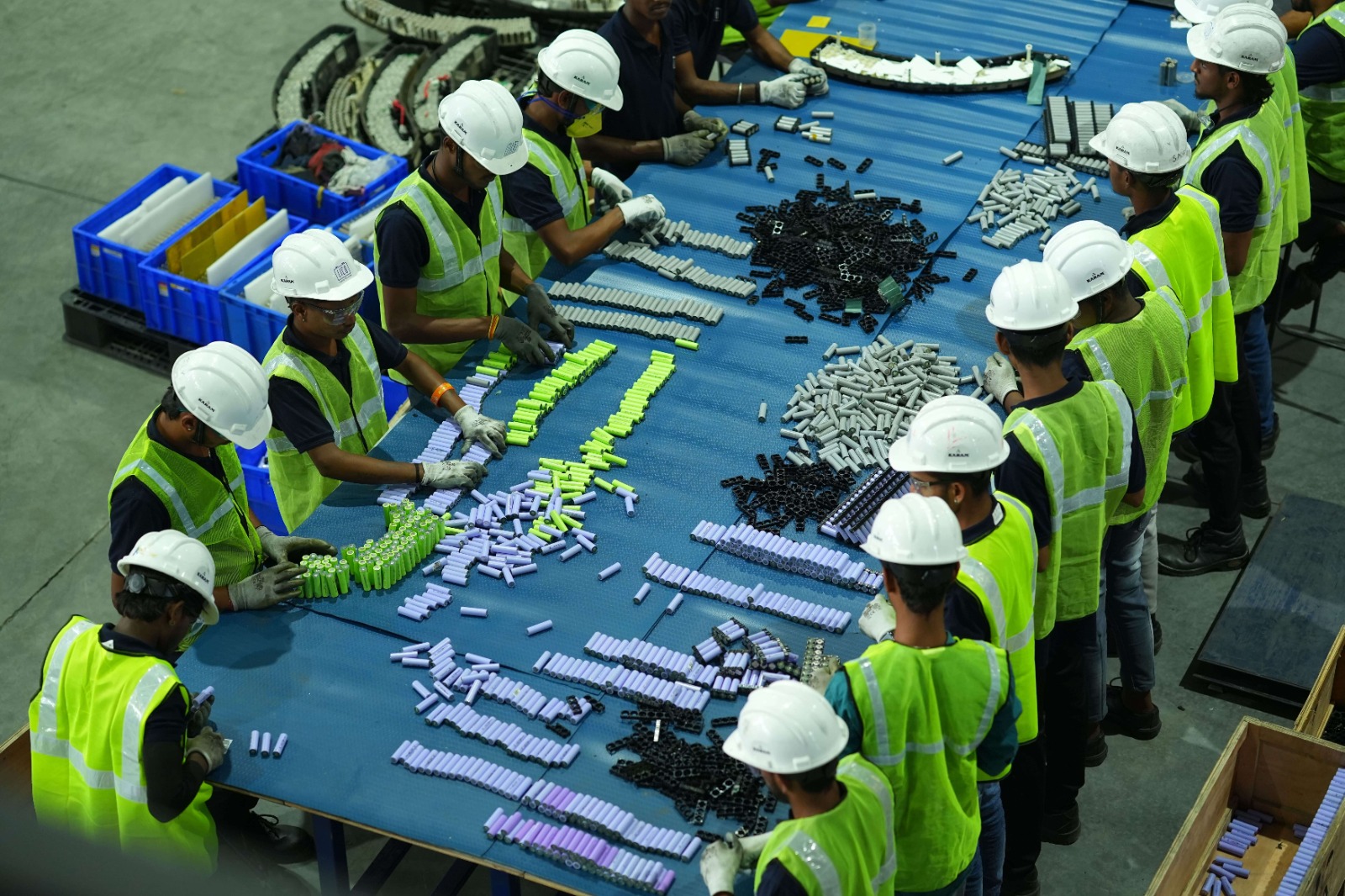
India’s goal of achieving 500 GW of non-fossil power by 2030 depends not only on expanding renewable energy capacity but also on effectively managing the rapidly increasing volume of lithium-ion battery (LIB) waste. Battery recycling presents a viable solution, with the potential to reduce greenhouse gas emissions by 81-98 per cent while recovering critical materials.
Currently, valuable resources such as cobalt, lithium, and nickel are lost through the export of unprocessed battery waste, representing Rs 2,100 crore in forfeited value in 2022-23 alone. Repurposing these materials domestically would strengthen supply chains, reduce import dependence, and enhance national resource security. Prioritising efficient domestic recycling is therefore both an environmental responsibility and a strategic imperative for economic resilience.
Extending Battery Life, Extending Value through the Circular Economy
At present, Asia Pacific is emerging as the fastest-growing region for second-life batteries, driven by expanding EV markets in India, China, Japan, and South Korea. While lithium-ion battery stock from consumer electronics currently accounts for 49 per cent, the transport sector is rapidly catching up, already contributing 38 per cent of LIB demand in 2022. With a potential 49.2 GWh market for second-life batteries (SLBs) from retired EV batteries alone, the right policy and investment could generate up to 18 GWh through repurposing. However, for this opportunity to materialise, India's recycling capacity must scale by ninefold by the end of this decade.
Consider the potential for grid-scale energy storage. Research suggests that even with 500 GW of non-fossil capacity by 2030, India will need substantial battery energy storage (BESS) and additional firm capacity to bridge peak deficits. Second-life batteries can play a vital role in enhancing grid stability by storing renewable energy generated during off-peak hours.
Storage solutions also decongest the grid and reduce renewable curtailment rising from supply-demand mismatch. Through commercial and residential applications, repurposed batteries can provide a reliable and affordable source of power for off-grid villages. Enabling rural electrification, second-life battery systems can help power millions of homes and optimise their energy consumption, supporting India's "24x7 Power for All" initiative.
Repurposed second-life batteries (SLBs) usually give a savings of 30-70 per cent compared to new batteries. Analysis also reveals reduced net present cost and energy use of SLBs by 36 per cent and 35 per cent, respectively, when compared to new batteries. Reducing the cost of establishing rural EV charging stations, SLBs make electric mobility more accessible and affordable in underserved areas. Beyond transportation, India's extensive network of over a million telecom towers, many of which currently rely on diesel generators, can significantly reduce emissions by transitioning to second-life battery backup systems. This offers a cleaner and more sustainable alternative for powering critical communication infrastructure.
Policy to Practice in Strengthening the Second Life Ecosystem
Europe has established itself as a global benchmark in e waste management. In 2022, it generated approximately 12 million tons of e waste - the highest worldwide, while achieving the highest documented collection and recycling rate, exceeding 45 percent. Driven by government subsidies and stringent regulations, Europe’s second life EV battery market was valued at $188.3 million in 2023, with projections to reach $5.86 billion by 2033.
A coordinated push by policymakers, industry, and innovators is essential to similarly unlock India’s full potential as current investments support only about 2 Gwh of recycling capacity. While the Battery Waste Management Rules have strengthened the framework through Extended Producer Responsibility and digital traceability, persistent gaps in material collection and organised recycling remain. Addressing these challenges is critical for scaling capacity and realising the broader benefits of a circular battery economy.
Continued emphasis on strengthening Extended Producer Responsibility (EPR) and streamlining collection logistics comes foremost in ensuring a steady supply of end-of-life batteries for recycling and repurposing. Exploring incentives and investment in research and development initiatives such as advanced battery diagnostic tools, modular Battery Management Systems designed for reuse, and standardised testing labs will be essential for ensuring the safety and reliability of second-life battery systems.
Above all, a collaborative partnership between OEMs, recyclers, and distribution companies to develop and implement scalable pilot projects will help accelerate the adoption of second-life battery solutions across various sectors.
Without a circular strategy being our topmost priority, today’s clean energy enablers can become tomorrow’s environmental challenges. The real test for India’s energy transition lies not just in how much clean power we can generate, but in how sustainably we manage the very technology driving this growth.